



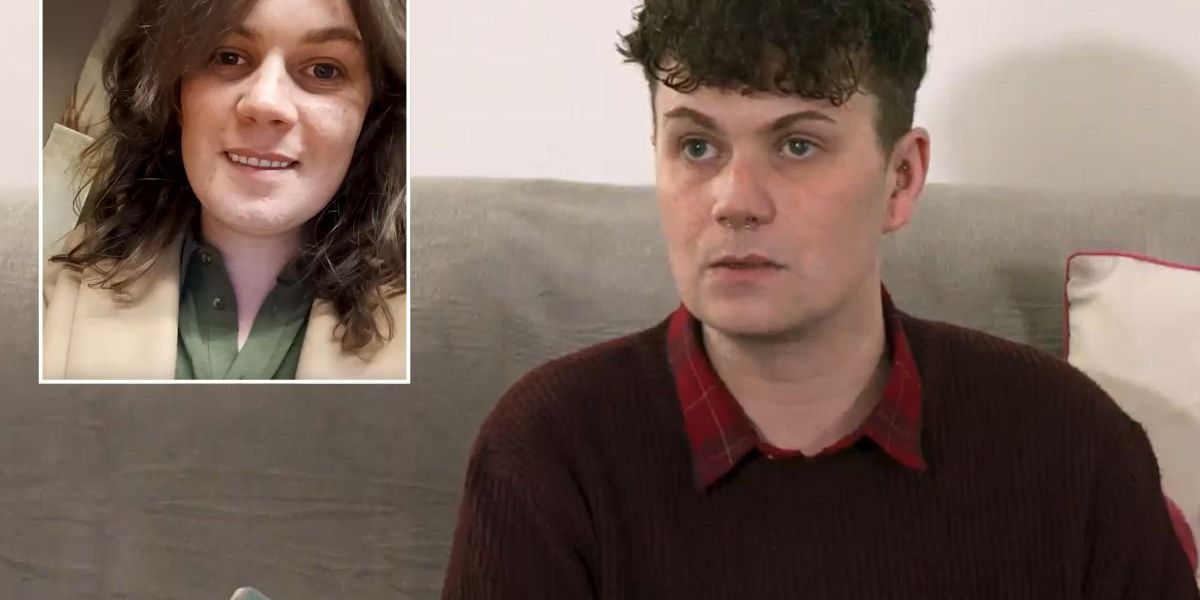
A Scottish man who spent most of the last decade transitioning into a woman has described gender ideology as being “rooted in misogyny and homophobia” after beginning his detransition in 2025.
Michael Kerr, who legally changed his name to Caitlyn after turning 25, described undergoing all the “stereotypical” changes in his life as he awaited hormone treatment from Glasgow’s Sandyford clinic for sexual health.
In the lead up to making his decision to begin detransition, he recognised that his journey was fuelled by traumatic events in his past and a cocktail of drug and alcohol abuse.
Even as a trans rights activist, he recalls an inflection moment when the Gender Recognition Reform Bill was moving through the Scottish Parliament, before ultimately being vetoed by then-Scottish Secretary Alister Jack in Westminster.
“I didn’t like it – I didn’t think it was beneficial to anyone,” Mr Kerr told GB News.
“It kind of put a spotlight on the trans community as dangerous and at that time I was still very much a trans rights activist and I was very much in the heat of things.
“It was dangerous for everyone in general society and for the trans community as a whole and there were other ways – and still other ways – the Scottish Government can help people who are experiencing this discomfort.”
Mr Kerr stopped taking hormones at the end of May 2025 and declared his detransition to Sandyford at the start of June 2025, but the support he received afterwards paled in comparison to the affirmation of before.
When Mr Kerr asked about the next steps, he said he was told: “We don’t know – I’ll need to go and ask because I’ve never dealt with someone who’s detransitioning.”
He believes that if affirming “this idea of being able to transition”, then NHS services should have a “backup plan” to catch those who detransition.
Michael Kerr, who legally changed his name to Caitlyn after turning 25, described undergoing all the “stereotypical” changes in his life as he awaited hormone treatment from Glasgow’s Sandyford clinic for sexual health
|
GB NEWS
He added: “People make mistakes, we’re human, so why have we not got a safety net for people who make mistakes? I’ve very much been left on my own.”
Looking back at his earliest interactions with Sandyford, he considered how differently things may have turned out had his thoughts been questioned instead of affirmed.
“You can affirm something and still question it,” he stated.
“It’s not downright disrespectful to a patient to question them, you can ask them where this discomfort came from.
“If they questioned me more about my uncomfortability [sic], it stemmed off of puberty – well, puberty isn’t that comfortable an experience for the majority of people.”
Now he believes that gender ideology is “rooted in misogyny and homophobia”, claiming that a gay man’s diagnosis for gender dysphoria is “built around stereotypes”.
“In my medical records, it reads: Caitlyn had her hair done; Caitlyn was wearing makeup; Caitlyn was wearing female clothing,” he said.
“But we see just gay men wearing makeup now and gay men in high heels – this is stuff that gay men have been doing for centuries.
“Why are we only now saying that gay men with long hair wearing makeup is trans and no longer gay?
“It’s like modern day conversion therapy for gay people.”
Detransition – the act of reversing one’s transition while on medication but before surgery – is an outcome for only a small percentage of transgender Brits.
Looking back at his earliest interactions with Sandyford, he considered how differently things may have turned out had his thoughts been questioned instead of affirmed
|
GB NEWS
Wide-ranging studies estimate the figure stands somewhere between one and eight per cent.
However, the figure is broadly considered too difficult to quantify due to a number of factors.
According to retired paediatrician Jennifer Cunningham, reasons include the stigma from the transgender community, self-castigation and the disillusionment towards the very sexual health services that played a significant role in their transition.
She said: “One of the reasons is that transgender activists have said they’re a complete minority and they couldn’t have been transgender in the first place – that’s been their argument all along.
“But [detransitioners] have regrets about things not turning out as expected, or the difficulties in their lives not being solved by transition, but the last place they want to turn to is the one that got them to where they’re moving away from.”
Dr Cunningham harked back to the release of the Cass Review in April 2024, which urgently called for services where detransitioners could turn to with confidence.
“These services have not been set up at all,” explained Dr Cunningham.
She added: “I don’t know whether some of the gender identity services are exploring how to do this, but certainly as far as I am aware, that recommendation has not been followed through.”
She went on to explain that some steps have been taken since the publication of the Cass Review, with attempts made to “set up a paediatric service “which will not accept the self-diagnosis of a child or a young person but will explore their background and sexuality”.
Glasgow’s Sandyford Clinic said it strives to offer support and compassion to detransitioners.
A spokesman for NHS Greater Glasgow and Clyde said, “We recognise the difficulties people may face during this process and we can provide support and practical advice.
“All patients are offered medical and psychological appointments, and they can choose to opt-in for continuing psychological support.
“The Gender Identity Clinic follows national guidelines, and our clinicians have access to a range of training on emerging practice, which is guided by the British Association of Gender Specialists.”
Mr Kerr has had plenty of time to reflect on his journey and on the goals and agenda of the trans rights lobby.
He told GB News: “If trans people want a place within society, along with society, do what gay people did.
“They’ve got their rights without taking rights off of anyone else.
“Pull up a seat, get a plate, sit down and stop asking for extra privileges that you do not need.”
Having shared his story with GB News, he hopes Detrans Awareness Day – on March 12 – will provide an opportunity for more people to understand the concerns detransitioners hold.