




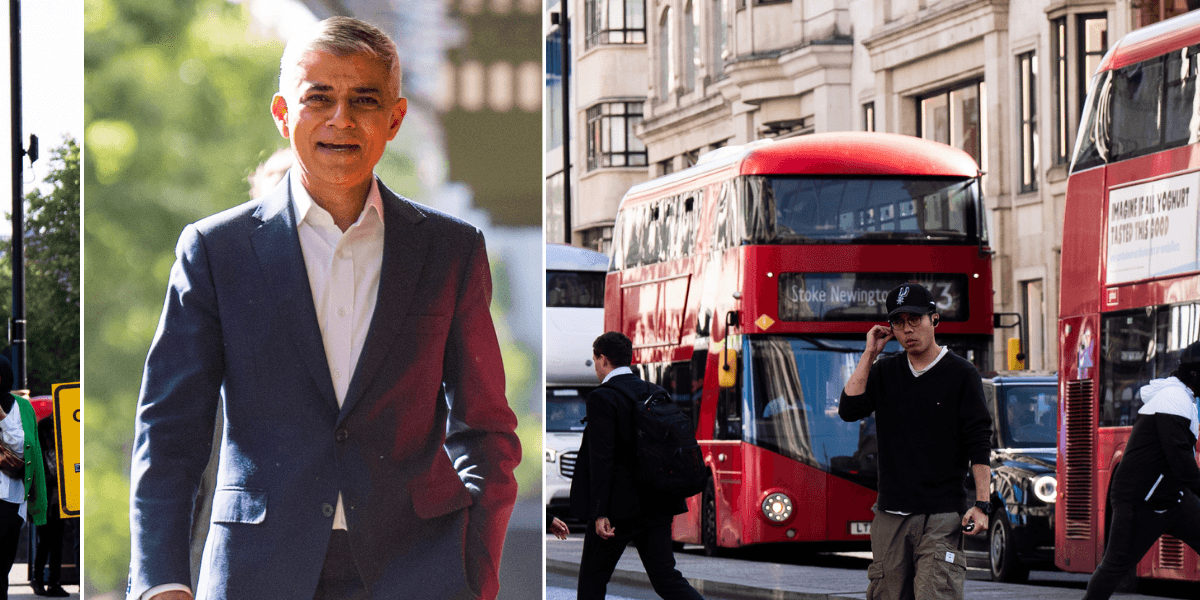
Sadiq Khan’s car ban plans for Oxford Street have hit a fresh roadblock after Westminster City Council formally rejected key changes to bus routes serving the area.
The setback comes as Transport for London pushes ahead with rerouting buses as part of the Mayor’s flagship plan to pedestrianise Oxford Street, a move critics warn risks making it harder, not easier, for ordinary Londoners to get around.
In a consultation response, the council said it could not support TfL’s proposal to change bus routes 7 and 94, which currently run directly along Oxford Street.
The Labour-run council warned the changes would cut off vital links for passengers travelling from Lancaster Gate, Bayswater and Hyde Park to Oxford Circus and Piccadilly — routes heavily relied on by shoppers, workers and tourists.
Writing to TfL, Councillor Geoff Barraclough, Westminster’s Cabinet Member for Planning and Economic Development, said the transport authority should “either preserve full operation of these routes or establish alternative direct links”.
The council also pointed out that central London bus services have already been “significantly reduced” since the pandemic, adding that further cuts would pile pressure onto passengers who have few other affordable options.
TfL‘s plan would see buses diverted away from the pedestrianised section of Oxford Street, with one suggested route running via Marylebone Lane South.
But Westminster said this would create new problems and questioned whether the road was suitable for regular bus traffic.
Westminster Council called on TfL to address concerns around bus displacement due to the Oxford Street car ban
|
PACouncil officers suggested alternative routes, such as Welbeck Street or Wimpole Street, might be more appropriate, while warning that sending buses along Great Portland Street would require major safety upgrades at busy junctions with Mortimer Street and Great Castle Street.
Westminster asked TfL where buses would go if Wigmore Street were closed, noting that George Street cannot accommodate buses and that there are very few east-west routes left in the area.
Floating bus stops were another sticking point. The council said any such designs must follow Department for Transport guidance and urged TfL to avoid shared-use bus boarders altogether, citing safety concerns.
The dispute comes as Sadiq Khan continues to push his wider vision for a car-free Oxford Street, turning the road into what City Hall describes as a world-class destination for shopping, leisure and outdoor events.
The London Mayor gained new powers in January to help push forward with pedestrianising Oxford Street | GETTY
A public consultation on the scheme closed earlier this month. The Mayor’s office claims around seven out of 10 respondents backed the regeneration plans, with two-thirds supporting pedestrianisation.
Sir Khan has also set up a powerful new body, the Oxford Street Development Corporation, which officially launched on January 1, having been approved by the London Assembly last summer.
The board is chaired by retail veteran Scott Parsons, with Nabeel Khan appointed as chief executive. Westminster Council leader Adam Hug holds one of three council seats on the board.
Despite this involvement, Westminster warned that removing or reducing bus services could push traffic onto surrounding residential streets, including North Audley Street, Grosvenor Square and Cavendish Square.
Map of the proposed pedestrianised route along Oxford Street | TFL
The council questioned how shoppers would travel between major stores such as Selfridges, IKEA and the Tottenham Court Road Primark if bus services were effectively halved.
It also demanded detailed modelling data, journey reliability figures and clear contingency plans for roadworks and diversions.
Emergency access was another concern, with Westminster seeking assurances from police, fire and ambulance services that Oxford Street would remain reachable.
The council also called on TfL to set out a clear timetable for switching buses to fully electric vehicles and to commit to long-term monitoring of air quality and noise across the area.
While Westminster accepted that the decision to pedestrianise Oxford Street has effectively been made, it said it would continue to challenge proposals that risk harming residents, businesses and visitors.