




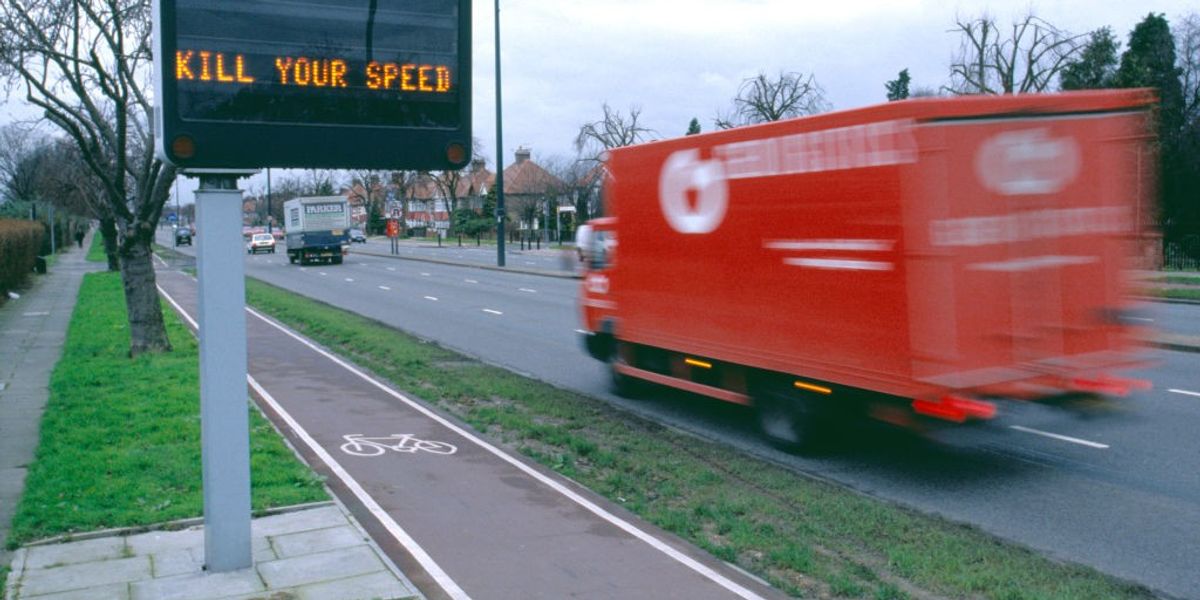
Motorists have been urged not to linger alongside heavy goods vehicles following renewed warnings about the potentially fatal consequences of driving in a lorry’s blind spot.
Nottinghamshire Police have backed a National Highways campaign designed to reduce the number of collisions involving HGVs and smaller vehicles.
Officers warned that many drivers simply do not appreciate the limitations lorry drivers face, particularly when it comes to visibility and stopping distances.
The campaign focuses on what are known as the four “danger zones” around an HGV. These are areas where the driver’s field of vision is significantly restricted.
The blind spots are located directly in front of the cab, directly behind the vehicle, and along both the left and right sides.
Heidi Duffy MBE, traffic management officer at Nottinghamshire Police, said many motorists have little understanding of what it is like to operate a large vehicle.
She said: “Most drivers have never set foot in, let alone driven, an HGV, so they do not appreciate the challenges associated with driving them – such as increased stopping distances and greatly restricted views of passing traffic.
“When collisions do occur, the size difference between vehicles greatly increases the risk of death and serious injury.
The campaign was prompted by a rise in collisions involving HGVs
|
GETTY“We are determined to reduce the number of such collisions and are urging local drivers to pay attention to these warnings.”
National Highways has also highlighted the fact that large vehicles are considerably longer and heavier than standard cars.
The agency explained how some drivers often underestimate how large the blind spots are and how easily a smaller vehicle can disappear from view.
To prevent getting caught in a blind spot, experts stated drivers should avoid driving alongside an HGV for longer than necessary and should complete overtaking manoeuvres promptly and safely.
The police hoped the new campaign would improve road collisions involving HGVs
|
NOTTINGHAM POLICE
Drivers were also reminded that overtaking a lorry takes more time than overtaking a car, and they must ensure there is sufficient space ahead before committing to the manoeuvre.
National Highways warned drivers not to pull back in too quickly, as doing so may place them directly into the front blind spot.
Tailgating was another major concern, as drivers who follow too closely behind an HGV may not be visible in the vehicle‘s mirrors or cameras.
National Highways advised that if a motorist cannot see the lorry’s mirrors, then the lorry driver cannot see them. Following at a safe distance not only improves visibility but also allows more time to react if traffic ahead slows suddenly.
The campaign urged drivers to be aware of the dangers of driving close to an HGV
|
GETTYThe campaign also reiterated how drivers should not overtake on the left. However, if a motorist finds themselves in the left-hand lane with an HGV to their right, they should move out of the limited vision zone as soon as it is safe to do so, as the lorry driver may be unaware of their presence.
Although double mirrors have been mandatory on new lorries since 2007 to help reduce blind spots, visibility can still be restricted by the vehicle’s size and the surrounding environment.
The agency said that while HGV drivers are specially trained to anticipate risks in different road conditions, safety ultimately depends on all road users acting responsibly.
Officials are urging drivers to slow down when conditions change, including during poor weather or heavy traffic, and to give large vehicles the space they need.