



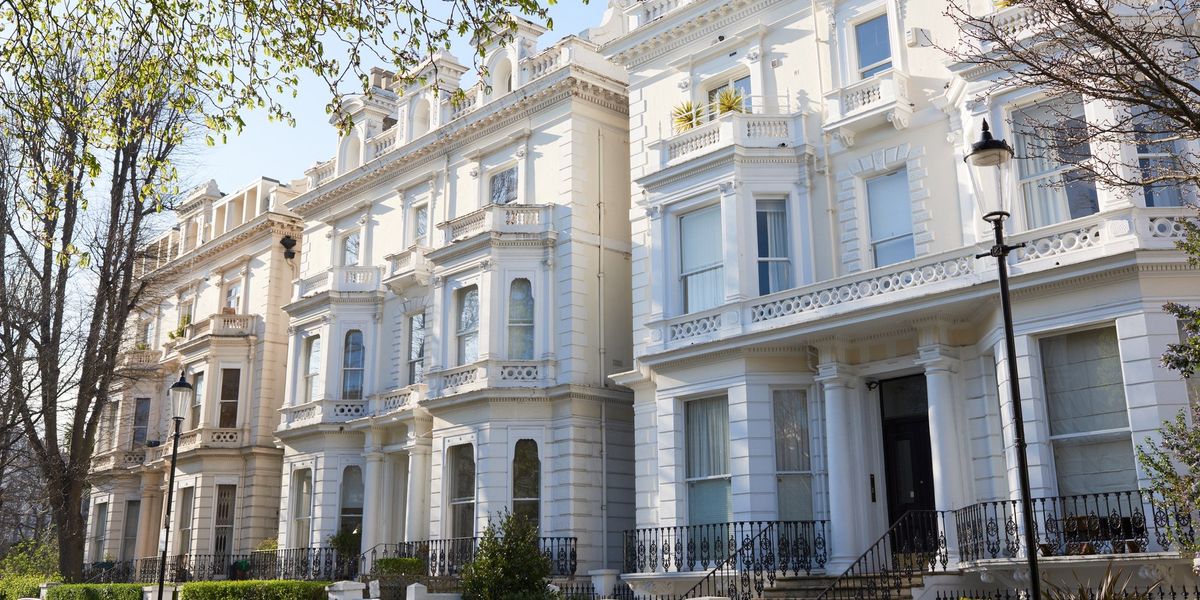
A new investigation has found that foreign owners are hiding the true beneficiaries of nearly 45,000 UK properties worth an estimated £190 billion, in what experts believe may amount to widespread breaches of anti-corruption laws introduced after Russia’s invasion of Ukraine.
The findings suggest that transparency rules brought in under the Economic Crime Act 2022 are being widely ignored and poorly enforced.
The investigation, reported by The Times, shows that overseas companies which own UK property were required to register with Companies House by January 2023 and declare anyone who owns or controls more than 25 per cent of shares or voting rights.
Under the rules, companies that fail to comply can face fines running into hundreds of thousands of pounds, as well as criminal prosecution, but the research indicates these penalties have so far had little impact.
Tax Policy Associates, a legal policy think tank led by former tax lawyer Dan Neidle, analysed Land Registry data covering 97,978 properties in England and Wales held by offshore companies.
The analysis found that for 43,401 of those properties, around 44 per cent of the total, it was not possible to identify the true owners behind the offshore entities.
The investigation found that the lack of transparency falls into four main categories. Around 8,198 properties remain completely unregistered, while 9,265 are registered but state that no beneficial owner exists.
Another 4,942 properties list a different offshore company as the owner, adding further layers that make it harder to trace who ultimately controls the asset.
The largest group covers 20,996 properties where trusts are recorded as the owners. However, Mr Neidle said these entries often name lawyers or accountants rather than the individuals who actually benefit from or control the trusts.
Enforcement of the rules has been particularly weak, with only three per cent of financial penalties successfully recovered from offshore companies that failed to comply.
Of the 444 fines issued, just 14 have been collected, raising £700,000 out of a total £22.99million in penalties.
Foreign owners ‘hiding’ £190billion worth of UK property across 45,000 homes
|
GETTY
“It looks like a classic example of a policy being introduced that hasn’t been followed up by enforcement resources,” Mr Neidle says.
Campaigners argue that a lack of funding and staffing at Companies House has encouraged some overseas property owners to take the registration rules less seriously, believing they are unlikely to be caught.
The share of registered properties stating that they have no beneficial owner has increased sharply, rising from 9.1 per cent in December 2022 to 19.2 per cent last year.
Mr Neidle also suggested that, beyond concerns about money laundering, some owners may be concealing their identities to avoid capital gains tax, which has applied to non-residents since April 2015.
Jersey was identified as the most common offshore jurisdiction, accounting for 29 per cent of all overseas ownership structures.
Saudi Arabia shows the highest rate of complete non-compliance, with 92.9 per cent of its 252 properties—234 in total—failing to register at all
|
GETTY
The crown dependency accounts for 3,234 properties claiming no beneficial owner, 6,715 trusts listed as financial services companies, and 1,883 properties naming another offshore entity as owner.
Saudi Arabia shows the highest rate of complete non-compliance, with 92.9 per cent of its 252 properties—234 in total—failing to register at all.
One Saudi company alone owns 125 unregistered properties.
Liechtenstein, Denmark and France also display significant non-disclosure, with 22.9 per cent, 63.5 per cent and 49.2 per cent of their respective properties lacking declared beneficial owners.
London concentrates the bulk of hidden wealth, accounting for £107billion of the £188billion in improperly declared property across England and Wales.
Baroness Margaret Hodge, appointed as the Government’s anti-corruption champion, will lead a review of the register’s operation, with findings expected this autumn.
The Government’s December anti-corruption strategy pledged to examine methods for better identifying and verifying asset ownership while closing existing loopholes.
Margot Mollat, senior researcher at Transparency International UK, emphasised the original purpose behind disclosure requirements: “It must be remembered that the original urgency for this disclosure, after the invasion of Ukraine, was to urgently help us to understand who owns property in this country. And until we fix these transparency loopholes, we don’t have a clear picture.”
The Government’s anti-corruption champion will lead a review of the register’s operation, with findings expected this autumn
|
HOUSE OF COMMONSA Government spokesman says: “We will look at this report carefully as part of our commitment to fighting illegal financial activity through the Register of Overseas Entities.
“Companies House can issue warning notices and impose financial penalties on overseas entities that fail to register or comply with ongoing requirements, and these entities are prevented from selling, leasing or raising finance over their land until they comply.”