




Tools like ChatGPT and Microsoft Copilot, which seem to have popped up out of nowhere a few years ago, are now ubiquitous.
Companies have started to step up their investment in the technology, with a growing belief that artificial intelligence could usher in a new era, akin to the industrial revolution.
As the likes of Meta and Microsoft pour billions into AI, there are concerns that the growing sophistication of the tech could upend industries like software and wealth management, and lead to job losses.
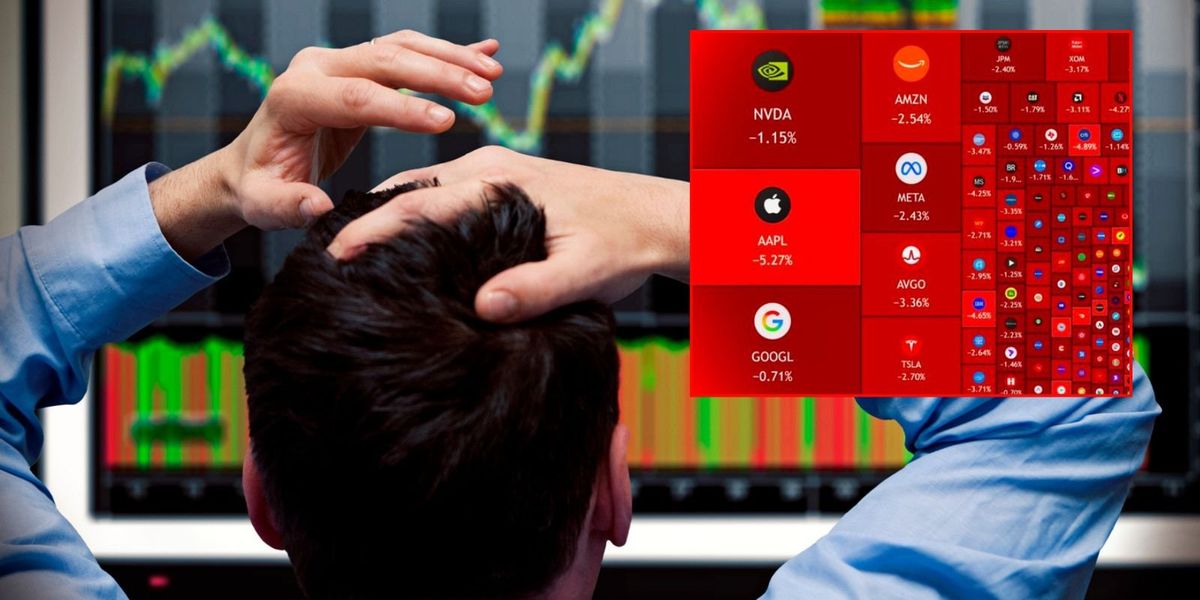
And it is starting to rock investor confidence. In recent weeks, a wave of new AI tools has caused substantial turbulence in financial markets, with tech stocks bearing the brunt of the rout.
Innovative: Dario Amodei is the chief executive of Anthropic
Investors worry that, if successful, it could wreak havoc across industries from finance to law and coding.
There are other sectors that could be primed for disruption, too.
Games Workshop shares have dropped around 10 per cent in the last month, with some analysts speculating that debates around AI are a contributing factor. Last month, the business banned its staff from using AI to design its miniature action figures.
The question on investors’ lips is: what’s next? Which other industries are at risk of disruption from AI developments, and are there any safe havens for investors in the AI era?
Data and software providers will remain in the ‘eye of the storm’
As investors grapple with the impact of artificial intelligence, the rout in software stocks is unlikely to subside any time soon.
Richard Hunter, head of markets at Interactive Investor, said he believes data firms look set to remain in the ‘eye of the storm’.
He told This is Money: ‘This is not just because of the data crunching which can potentially be done in seconds. ‘ Profits could end up being eroded, he added.
On the flip side, Hunter said: ‘By the same token, however, AI can only process the data with which it is presented, which in theory could lessen the impact if the data remains the property of the company.
Chris Beauchamp, chief market analyst at IG, said he believes the likes of Relx, Informa and Pearson are at risk, along with business like Sage and Darktrace.
Susannah Streeter, chief investment strategist at Wealth Club, added: ‘The companies which are likely to end up on the loser heap are those which have built up online-only services that can be integrated into the offerings of large language models.
‘Those that have rested on their laurels, charging big fees for “complex” services which AI can reduce into highly efficient simple tasks, will also be hit hard.’


Speaking out: The chief executive sought to ease investor concerns over AI this week
Watch what happens to wealth businesses
In Beauchamp’s view, wealth managers such as Hargreaves Lansdown and St James’s Place may also feel the effects of new AI developments.
Investors are concerned about the development of a new tool by Altruist Corp, led by former Wall Street execs, which will help advisers with tax strategies and client admin.
Beauchamp said: ‘The problem is simple: generative AI can replicate what these firms charge for.
‘High-fee, labour-intensive models are most vulnerable.
If AI can do it cheaper, customers will eventually switch. The direction of travel is clear
‘Pricing power will erode as customers realise AI tools offer acceptable substitutes at a fraction of the cost. Firms with proprietary data or regulatory content have some protection, but if AI can do it cheaper, customers will eventually switch. The direction of travel is clear.’
Hunter, of Interactive Investor, added: ‘Wealth managers in the US are already making the point that AI will remove some of the more mundane administrative tasks as well as being able to explain some of the more arcane areas within taxation and finance to customers.
‘However, this will by extension enable them to reach more clients with a simpler proposition and in any event AI cannot replace the comfort of face-to-face discussions where the empathy of the adviser comes into its own.’
Keep an eye on consumer portals
The performance of shares in businesses like Rightmove, Autotrader and Baltic Classifieds has been fragile in recent months.
According to Dan Coatsworth, head of markets at AJ Bell, newer search facilities on generative AI platforms are giving users a different way to search for things like houses or cars.
Coatsworth said: ‘This means portals must up their game and spend more money to make their sites essential places to visit.’
He added: ‘It’s no coincidence that Rightmove’s shares have been in steady decline since announcing last November it would make AI-related investments. A year earlier, any mention of AI would have been cause for celebration. Now it’s a suggestion that Rightmove is having to move with the times, and investors are jittery about companies spending on tech.
‘The question people might now ask is whether Rightmove’s AI spending plans are an offensive or defensive move.’
Watch retail developments
One of the biggest bugbears for online shoppers buying clothes is that the sizes vary from retailer to retailer. This leads to vast quantities of returns for retailers to deal with.
Coatsworth said: ‘AI has the potential to greatly reduce returns based on sizing by mapping the precise measurements of clothing onto a digital image of the shopper.’
He added: ‘The scope for AI to help drive sales and cut costs in retail is immense. It’s not only about embracing technology to help customers with look and feel, but also about using AI to offer virtual stylists, more powerful product recommendations, and even pre-filling shopping baskets with suggested items.

Could AI change everything? One of the biggest bugbears for online shoppers buying clothes is that the sizes vary from retailer to retailer
‘Retailers need to be in on the game, otherwise AI could put them in the bin if they don’t embrace technology.’
Hunter told This is Money the growth of AI could be a double-edged sword for fashion retailers, and almost certainly not good news for some staff in the industry.
Hunter said: ‘If a fashion house employs AI to design new products and lines, this is clearly negative for designers, but positive for companies which can get these new products to the market at a fraction of the time and cost.
‘This is a good example of where AI could be a double-edged sword in removing individual jobs but benefiting the company in terms of efficiency and therefore profitability.’
Take note of consumer goods for the future
Consumer goods businesses like Unilever and Reckitt face ‘subtler’ risks, Chris Beauchamp, chief market analyst at IG said.
He thinks that while the sector is not at grave risk from AI now, it could be one to watch for the future.
Beauchamp said: ‘AI won’t replace demand for shampoo or shoes, but it could help smaller competitors chip away at market share. The threat isn’t obsolescence, it’s margin compression.’
Car insurance is one to watch
Shares in British insurer Admiral have sunk by around 10 per cent in the last month. In January, US insurer Lemonade launched cover for autonomous vehicles.
Coatsworth, of AJ Bell, said: ‘Normally a new insurance product wouldn’t move the dial, yet Lemonade’s policy is half the estimated cost of what you’d pay on a car controlled by a real person.’
He added: ‘Lemonade uses AI to help with claims processing, underwriting, customer service and fraud decisions, making it a lower cost operator in the sector.
‘However, its autonomous vehicle policy isn’t simply Lemonade engaging in a price war – it’s a radical shift in the insurance sector and potentially bad news for companies like Admiral.’
This also begs the question as to whether the car manufacturer and vehicle software provider are liable in the event of an accident involving a fully self-driving car, not the person in the front seat. The human wouldn’t be controlling the vehicle.

Share shock: Shares in British insurer Admiral have sunk by around 10% in the last month
Coatsworth said: ‘If so, would that mean car insurers like Admiral who mainly serve the public would lose business to bigger commercial car insurers? That certainly poses a new challenge to the sector, and like always when new information is presented, investors react first and think later – hence the slump in Admiral’s share price.’
‘Retailers need to be in on the game, otherwise AI could put them in the bin if they don’t embrace technology.’
Hunter told This is Money the growth of AI could be a double-edged sword for fashion retailers, and almost certainty not good news for some staff in the industry.
Hunter said: ‘If a fashion house employs AI to design new products and lines, this is clearly negative for designers, but positive for companies which can get these new products to the market at a fraction of the time and cost.
‘This is a good example of where AI could be a double-edged sword in removing individual jobs but benefiting the company in terms of efficiency and therefore profitability.’
And where might be protected from AI change…
According to Beauchamp of IG, businesses involved in utilities, energy and commodities are faring well amid turbulence triggered by AI.
Beauchamp said such sectors were ‘largely insulated’ from the turmoil, adding that this looked set to continue.
You can’t automate away the need for electricity, oil or an aircraft carrier.
He said: ‘You can’t automate away the need for electricity, oil or an aircraft carrier.
‘These sectors rely on physical assets, regulated monopolies or brand scarcity that AI can’t replicate.
‘From an asset allocation perspective, boring beats clever in an AI world.
‘Infrastructure and commodities look structurally safer than anything charging fees for information or advice.’
This means shareholders with investments in firms like National Grid, Severn Trent, SSE, Shell and Rio Tinto could be in a solid position as the tentacles of AI expand.
DIY INVESTING PLATFORMS


AJ Bell
AJ Bell
Easy investing and ready-made portfolios

Hargreaves Lansdown
Hargreaves Lansdown
Free fund dealing and investment ideas

interactive investor
interactive investor
Flat-fee investing from £4.99 per month

Freetrade
Freetrade
Investing Isa now free on basic plan


Trading 212
Trading 212
Free share dealing and no account fee
Affiliate links: If you take out a product This is Money may earn a commission. These deals are chosen by our editorial team, as we think they are worth highlighting. This does not affect our editorial independence.
Compare the best investing account for you